 I have been playing for one hour. Not even. And I am already destroyed and invested in the story to the point I can not stop thinking about it.
Sophie sews Gustave’s coat. It is a small gesture. Almost Motherly. Tender. The kind of thing you would never notice in another game. But here, the camera lingers. His eyes widen, just slightly, at the care she has taken, the untold feelings in the air. No dialogue explains it. No narrator tells me why it matters. You just feel it: this moment, this weight of what is coming.
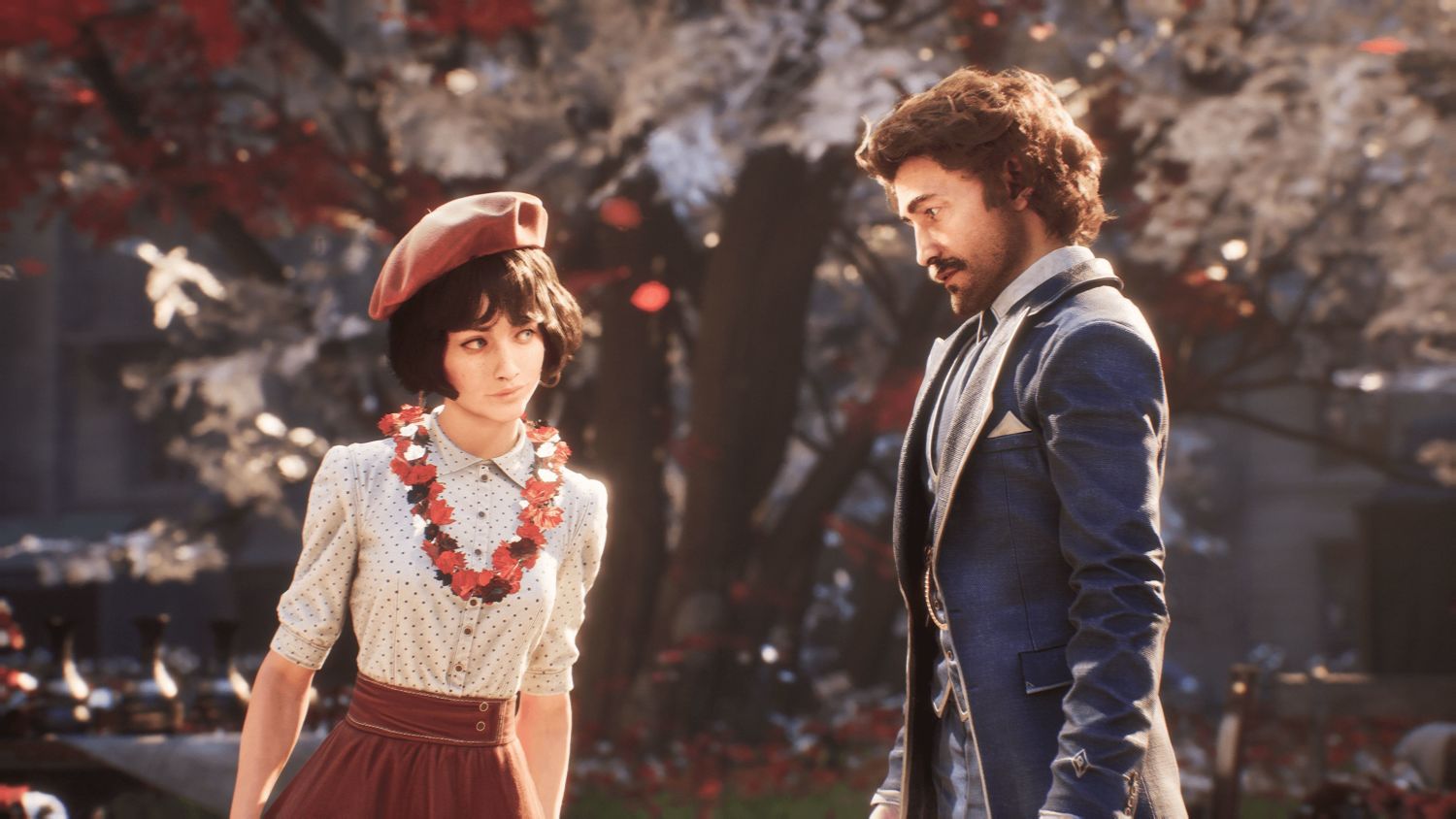
Then the Gommage happens. You do not understand it yet. The number on the monolith decreasing. The whole town heavy with a grief you cannot name. Eerie. Stomach-turning. Nobody explains what happened. You just feel the hole it leaves behind.
Then the farewell. The expedition tables. Five this year. Two more than the year before. Someone makes a dark joke about at least beating Expedition 34. Nobody laughs, but nobody cries either. The town has almost lost hope. Almost. But still they gather. Still they send their people into the unknown.
Gustave’s sister Emma gives a speech. Solemn. Harsh. Beautiful. She does not glorify what lies ahead. She acknowledges the fear, the weight of all the expeditions that came before. She speaks of duty and sacrifice and the fragile chance to break a cycle that has defined their world. It is both a rallying cry and a farewell. Not everyone may return. She does not pretend otherwise.
I did not expect to break this fast. Most games take hours to earn a single tear. Clair Obscur: Expedition 33 earned mine before the first combat tutorial.
One streamer put it simply: “The game is too good that it sucks. (in a good way)” She meant it as the highest compliment. So do I.
What Sandfall Interactive did differently is not complicated to explain. It is just so very rare. They wrote the story first.
A team of 33+ people. Plus a dog. Working out of France with a budget smaller than most AAA marketing campaigns. They had no business making something this ambitious. And yet here it is putting everything else to shame.
In an interview, lead writer Jennifer Svedberg-Yen described the team’s philosophy with disarming clarity: “You can’t really start writing the story if you don’t know the answer to that fundamental question.” No mysteries without solutions. No dramatic hooks that kick the can down the road for six seasons. Guillaume Broche and Jennifer knew why the Paintress does what she does, who she really is, and what the emotional heart of this world would be.
They wrote 800 pages of backstories. Four generations deep for some characters. “I do firmly believe that who we are, how we think, is reflective of our experiences in the past,” Jennifer explained. “That was the main exercise behind writing out everybody’s backstories. Why are they traumatized? What’s their drama? Who traumatized their parents that then traumatized them?”
Jennifer described the writing process as becoming the characters. Her husband would look over and see her mouthing dialogue while typing, her face contorted into whatever emotion she was writing. She would pace around the kitchen, talking to imaginary people, acting out scenes before committing them to the page. “The act of writing an RPG is itself an RPG,” she said. “You have to actually put yourself in the shoes of every single character.”
Guillaume and Jennifer talked about wanting an HBO level of drama. That comparison tells you everything. This is not a game that talks down to you. It does not explain its metaphors. It trusts you to feel the weight without being told where to look.
~ Silence as Language ~
The games and films that stay with me share one quality: they know when to shut up.
This approach mirrors what made other great stories resonate. Stray tells its tale through a wordless cat navigating a robot city, trusting players to feel rather than be told. Jennifer called it out specifically as an inspiration: “They managed to create this whole world and story without actually, you know, in such a beautiful way.” The Last of Us builds its emotional weight through glances across a room, a hand on a shoulder, the things left unsaid between Joel and Ellie. The Lord of the Rings films carry urgency in every step toward Mordor, conveyed through Howard Shore’s score and the exhaustion in Viggo Mortensen’s eyes.
Expedition 33 inherits this lineage and pushes it further.
The prologue works because the music swells where words would cheapen. The harbor scene works because nobody explains the stakes. You see it in how people hold each other. You feel the weight of goodbye in a mended coat sleeve.
The eyes in this game are phenomenal. They tell more emotion single-handedly than most RPGs manage in hours of voiced dialogue. When a character’s face shifts, when you see the gears turning behind their eyes, you understand grief in a way that no monologue could deliver.
One streamer captured it perfectly while watching a pivotal scene: “He didn’t say a goddamn thing. But I felt so bad.” That is the craft. Silence as vocabulary. Body language as confession. Music as the voice of everything too heavy for words.
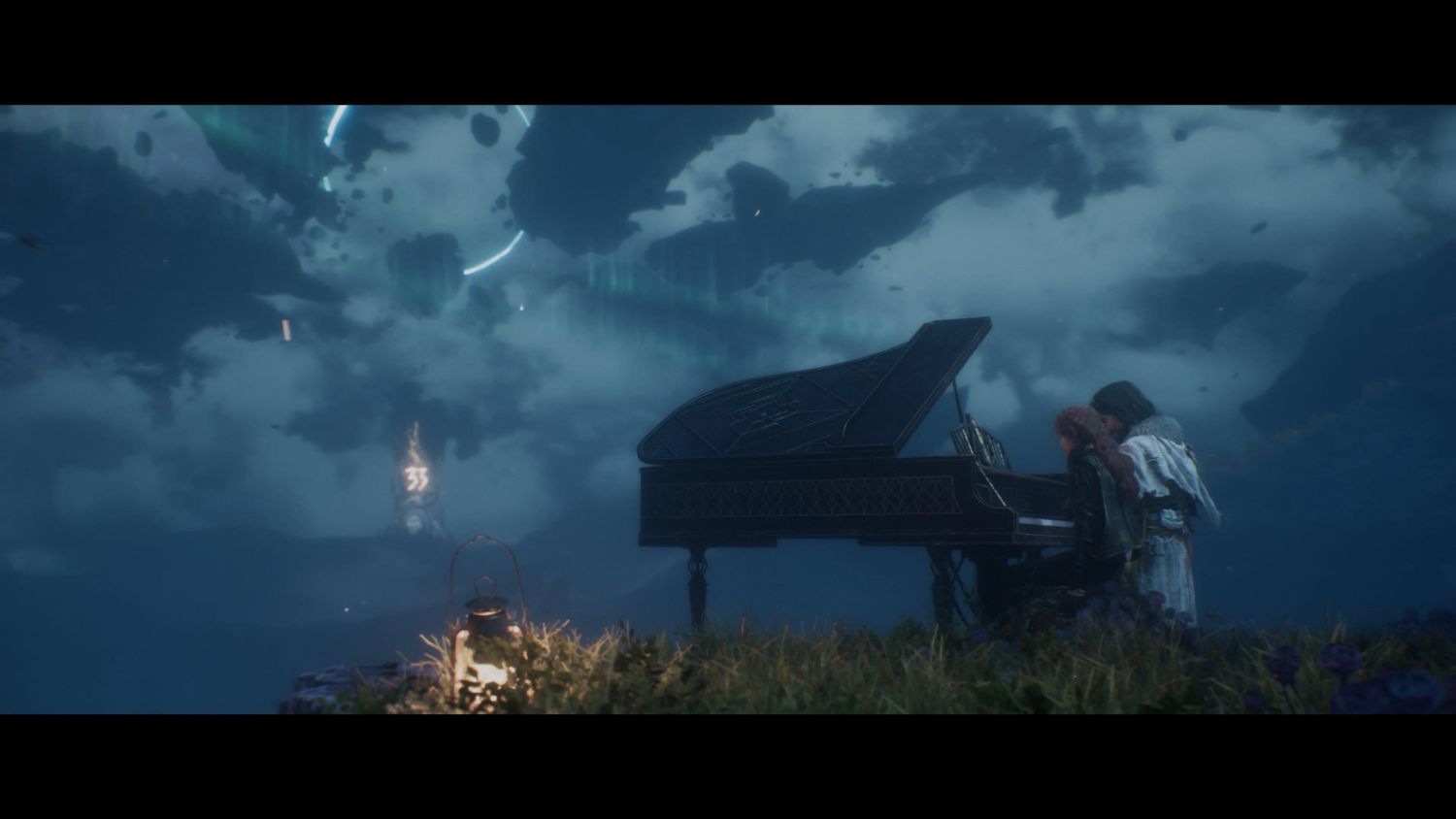
And speaking of music: the soundtrack has topped charts. Composer Lauran Toastard created something that players cannot stop listening to on repeat. Not just one track. All of them. I have never encountered a game where every single song feels essential. The somber piano for grief. The angelic vocals for fleeting beauty. The way boss themes carry emotional weight beyond the combat itself. This is a score that does narrative work.
Gustave hooked me first. His stoic aura. His unfinished sentences. His belief that “stubborn people change the world.” He carries the weight of Lumière on his shoulders, an engineer who has devoted his life to protecting and providing for his people. Now, as an expeditioner, he devotes what remains of his time to reclaiming a future for the children who will come after.
For those who come after.
That line echoes through the game. It is not just Gustave’s philosophy. It is the expedition’s creed. And by the end, it becomes yours too.
Lune is the scholar. The daughter of researchers who sacrificed everything to complete her parents’ work. Her one goal is to unravel the mystery of the Paintress. She carries the weight of responsibility and the stakes involved. She cannot and will not allow the expedition to fail.
Maelle brings a different energy. The youngest of the group, going nine years before her own reckoning with the Paintress. Orphaned young, she never felt at home in Lumière. She sees the expedition not as a death march but as her chance to finally forge her own destiny, to explore the world beyond the only home she has known. Her fire is contagious. Her questions cut deep. Her voice carries a spark that shifts as the journey unfolds, and that shift tells its own story.
Sciel is warmth masking pain. A farmer turned teacher, she enjoys life day by day and is at ease with death, having long accepted the brutality of their world. But her teasing smile hides a dark and painful past. She is untroubled by the spectre of failure: they will do all in their power, and it will either be enough, or it will not.
Verso. Mysterious. Layered. Carrying something unspoken that you cannot quite name at first. He watches. He waits. When he finally reveals more of himself, the weight of it lands differently depending on how carefully you have been paying attention. Every line he speaks, every silence he holds, is doing double duty. Its noted that he “never outright lies, but he will lie by omission and misdirect.” That tension defines him.
And then there is Esquie.
The legendary creature. Born at the dawn of time, lazy beyond belief, and surprisingly wise. Children in Lumière grow up on stories of his whimsical adventures. Legends say he can soar through the heavens and dive deep beneath the sea. Legends also say he is lazy. Both are true. When he finally appears, he brings levity to a heavy journey. But he also delivers one of the game’s most memorable lines:
Losing a rock is better than never having a rock.
It sounds absurd. It is absurd. But in context, it becomes something profound. A philosophy of love and loss wrapped in the voice of a creature who collects pet rocks named Florrie, Dorrie, and Soarrie. The game earns its humor because it has earned your tears first.
Alongside Esquie is Monoco, a Gestral who speaks the human language and has adopted a scholarly demeanor that belies a bloodthirsty spirit. The Gestrals are beings who enjoy the thrill of battle and view competition as a form of meditation. Monoco joins the expedition because the prospect of combat entices him. But beneath the warrior exterior, there is loyalty and loss that runs deep.
Everyone says you have to play it twice or even trice. They are right.
Dialogue that puzzled you gains weight. What seemed random becomes deliberate. Conversations that felt slightly off suddenly reveal their purpose. The writers planted seeds in the first hour that do not bloom until the final act, and you cannot see them until you go back. and these seeds… well they are scattered all over the place, even within the music.
One streamer described it as “enlightening.” Another said the second playthrough made every meaning hit you differently with totally different emotions. I would say it like this: the first playthrough tells you what happens. The second shows you what it means.
The game never drops. From beginning to end, there is no downtime. No filler. No padding. Every scene does work. Every conversation matters. That consistency is staggering in an era of bloated open worlds and checklist design.
The songs, the quotes, the scattered journals. All intertwined. All pointing toward the same devastating truths about love and loss and the lengths we go to avoid letting go.
Every sorrow is born of love.
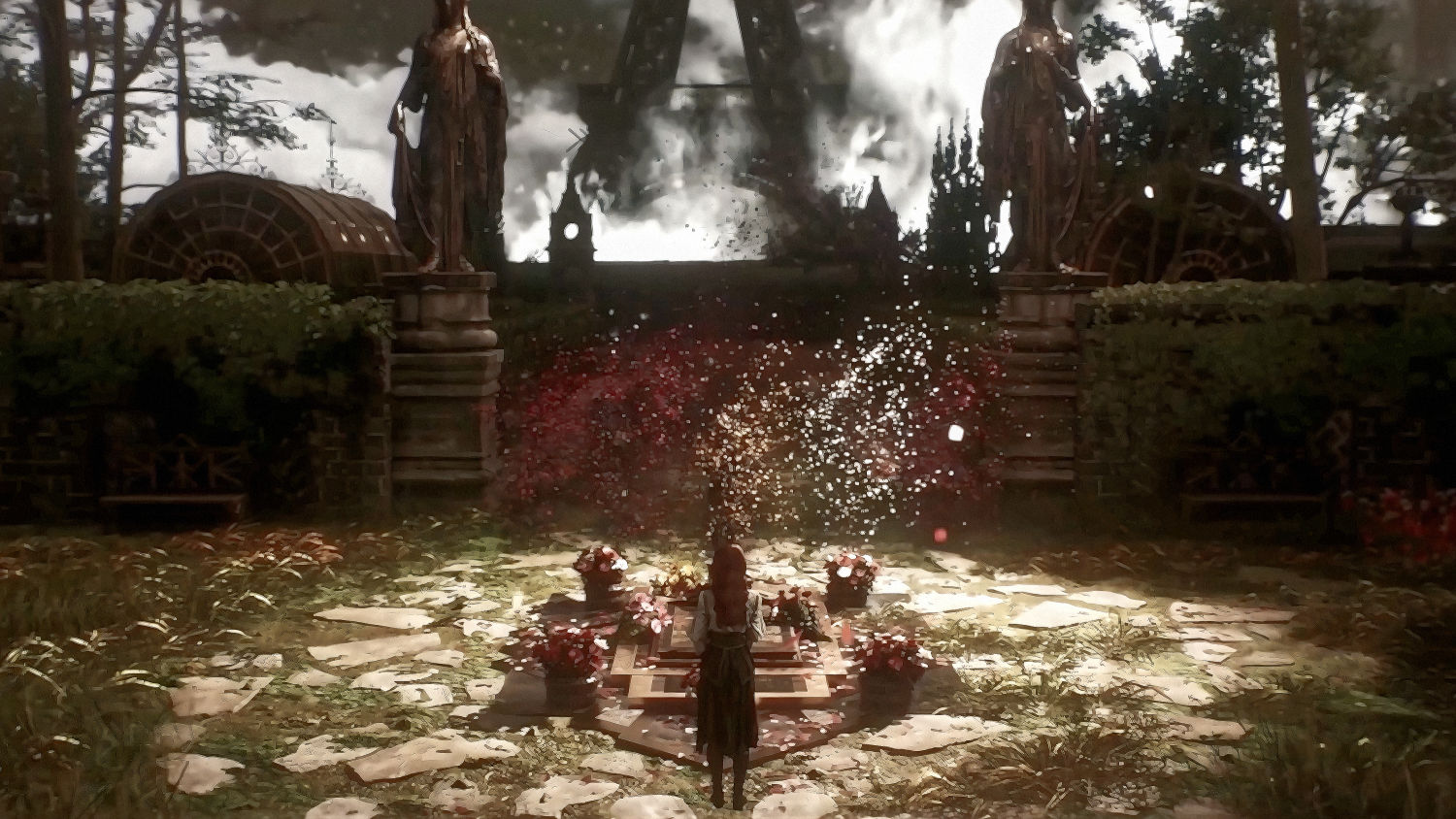
We would not grieve if we did not love. We grieve because we love. That is the whole game.
A Love Letter to Sandfall
Guillaume, Jennifer, and the team of 30+: you made something rare.
In an industry addicted to live-service loops and explained-to-death tutorials, you trusted players to feel and feel we did. You built a world where silence speaks, where eyes convey more than cutscenes, where a coat being sewn can break a heart. You wrote 800 pages so that every character could breathe. You answered your own questions before asking them. You acted out scenes in your kitchens and talked to imaginary people until the dialogue felt real.
There is a line in the game that captures what great art does: it is both mirror and window. A way to look into the minds of creators, and a reflection of how we see ourselves.
The industry will copy your parry system. They will clone your UI. Some studio will announce a “reactive turn-based RPG” and hope the lightning strikes twice. But I hope, desperately, that someone out there is also copying this: the story-first philosophy, the silent storytelling, the courage to let grief be felt rather than explained.
Jennifer described the relationship between creator and player as a handshake: “We reach out our hand, but then the player has to reach back out.”
I reached back. You moved my core. This game reminded me why stories matter, why games can heal, why 30+ people and a dog can create something that makes millions of players rediscover the love for games they thought they had lost.
For those who come after. For those who play it twice. For those who hum the soundtrack at 2 a.m. and still feel the weight of what this game gave them.
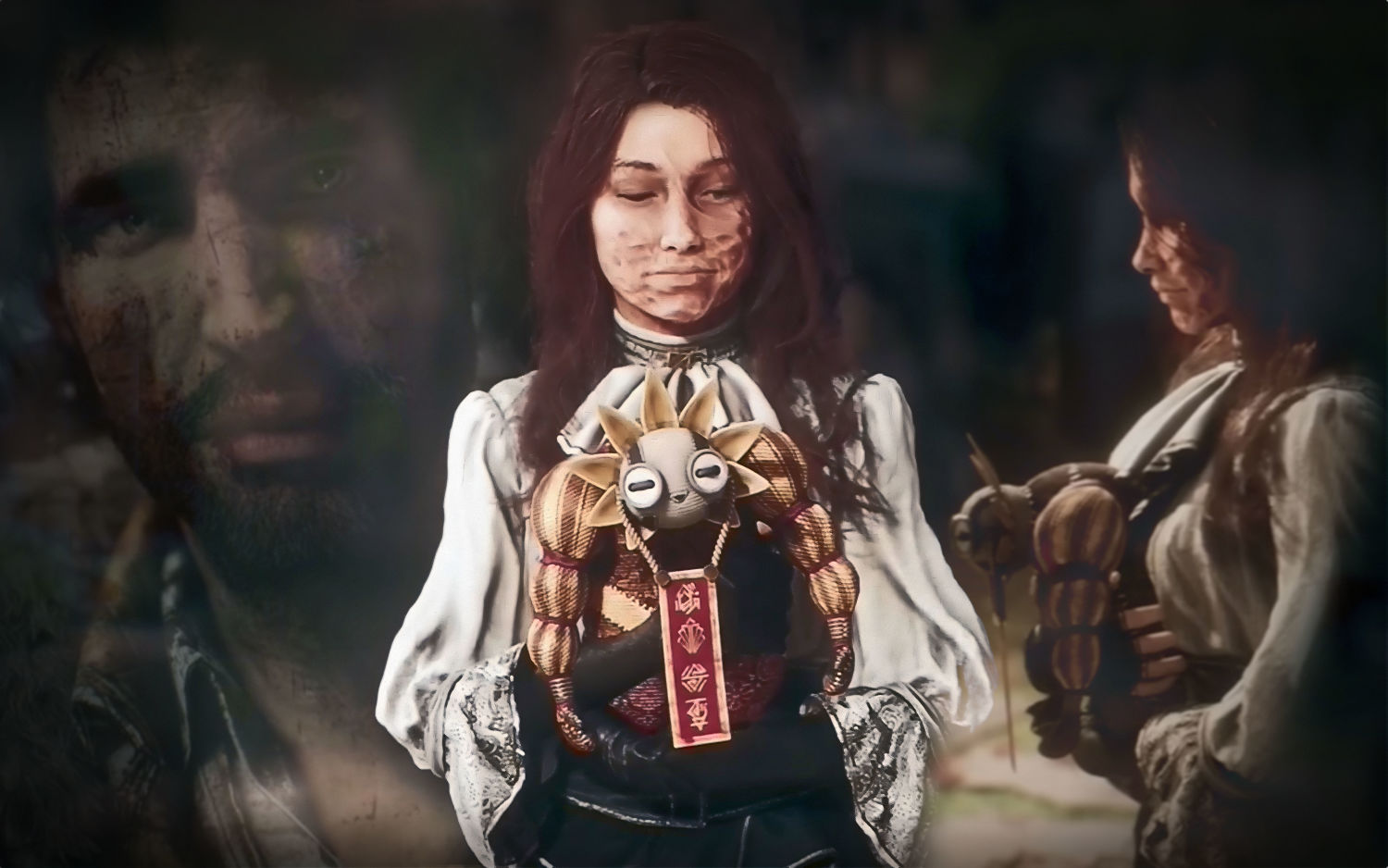
Tomorrow will come…
A teary fan, forever changed, and today i feel more Wheeee than Whooo!
Also. If you want more spoiler based retrospect on the game check out this video
Buy Me a Coffee